 Crowd Counter
How to count church attendance: 5 methods compared
Weekly attendance is one of the most useful numbers a church tracks. It drives budgeting, staffing, room planning, and it's often the first signal that something is changing in your congregation — for better or worse. But the number is only useful if it's collected the same way every week. Here are the five ways churches actually do it, and where each one breaks down.
1. Usher headcounts
The classic: ushers walk the aisles during the sermon and count each section. It works, and it costs nothing. The problems show up over time — different ushers count differently, people move around, latecomers get missed, and on a busy Sunday the count quietly doesn't happen at all. If your attendance graph has mysterious dips, inconsistent counting is the usual suspect.
2. Tally clickers
A clicker at each door as people enter. More consistent than section counts, but it needs a person per entrance for the entire arrival window, misses side doors, and double-counts the lobby wanderers. Fine for a single-entrance chapel; hard to keep honest in a larger building.
3. Check-in software
Tools like Planning Center or Breeze do a great job when everyone checks in — which in practice means kids' ministry and volunteers. Most adults in the main service never touch a kiosk, so check-in numbers systematically undercount the room. They're the right tool for security and rosters, not for total attendance.
4. Estimating from the platform
"Looks like about 250 today." Fast, free, and off by 20–40% in either direction depending on who's guessing. Estimates also drift optimistic over time, which makes trend data useless — the one thing attendance numbers are for.
5. Photo-based counting
The newest method: take one photo of the sanctuary from the back or the balcony, and let a crowd-counting AI model count every person in it. One person, one photo, a few seconds — done the same way every single week, with the photo kept as evidence behind the number.
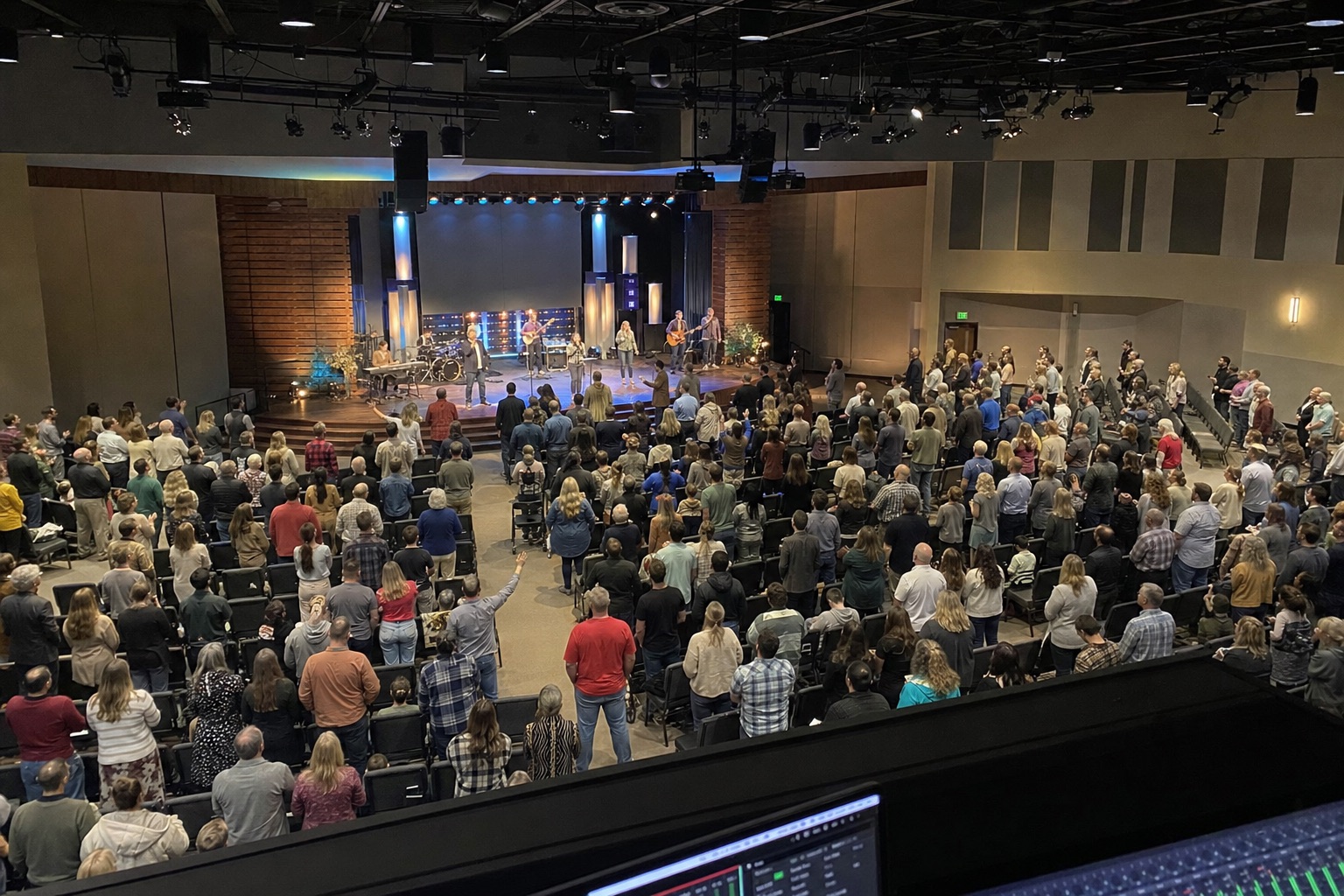
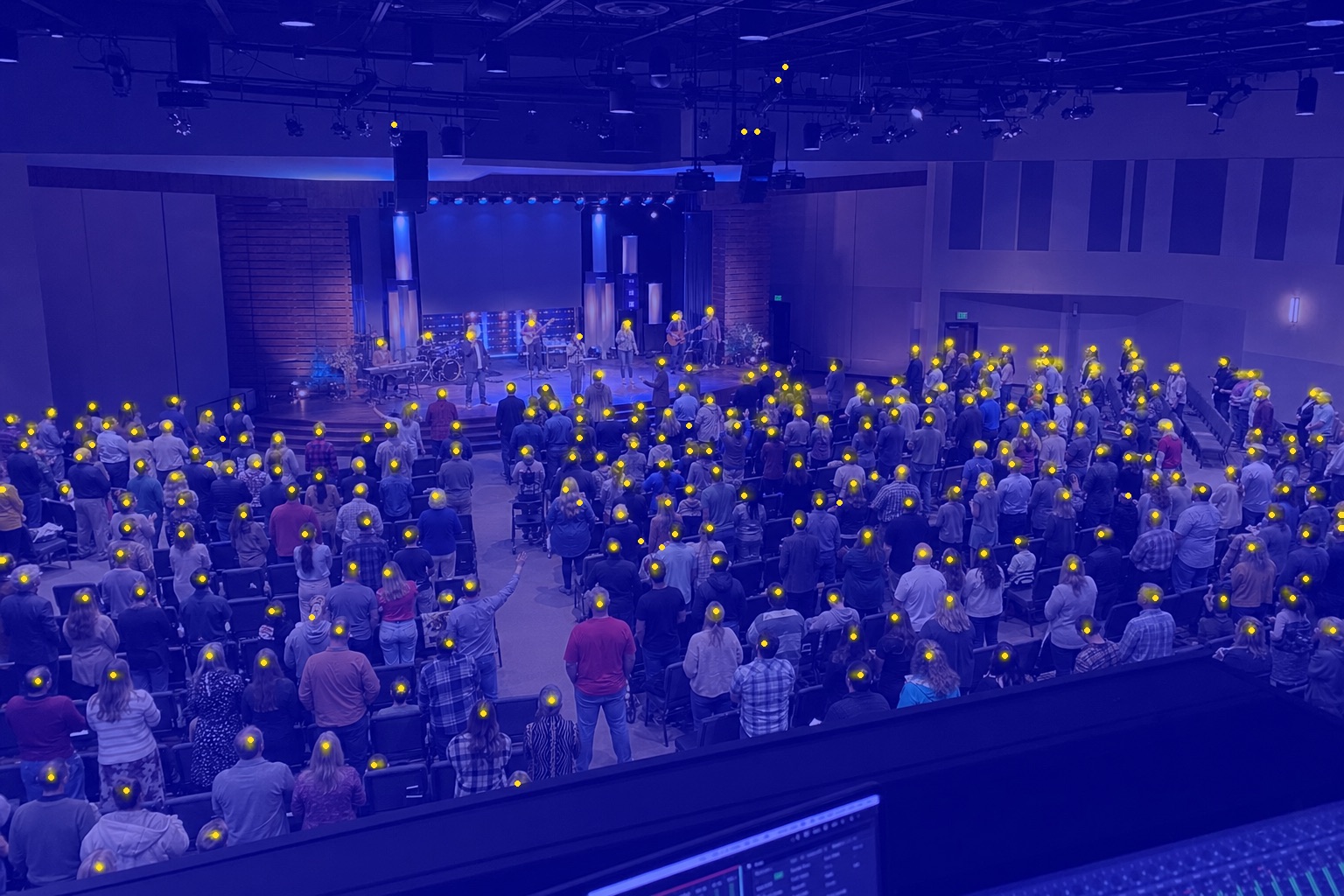
This is what Crowd Counter does. Snap a photo during the service, get the count in seconds, and every count files into a weekly record with trends over time. When the board asks for the numbers, you export a PDF report — with the photo behind every count — in one tap.
Count this Sunday's service from one photo — your first count is free.
Download Crowd CounterWhat matters more than the method
Whichever method you choose, three habits make attendance data worth keeping:
- Same time, every week. Count at a consistent point in the service (e.g. 15 minutes after the start), or week-to-week comparisons are noise.
- One owner. A single person or role responsible for the count means it actually happens.
- Write it down somewhere queryable. A number shouted across the lobby is gone by Tuesday. A record with dates lets you see the year, not the week.
Consistency beats precision. A method that's 95% accurate every single week beats one that's 99% accurate when someone remembers to do it.