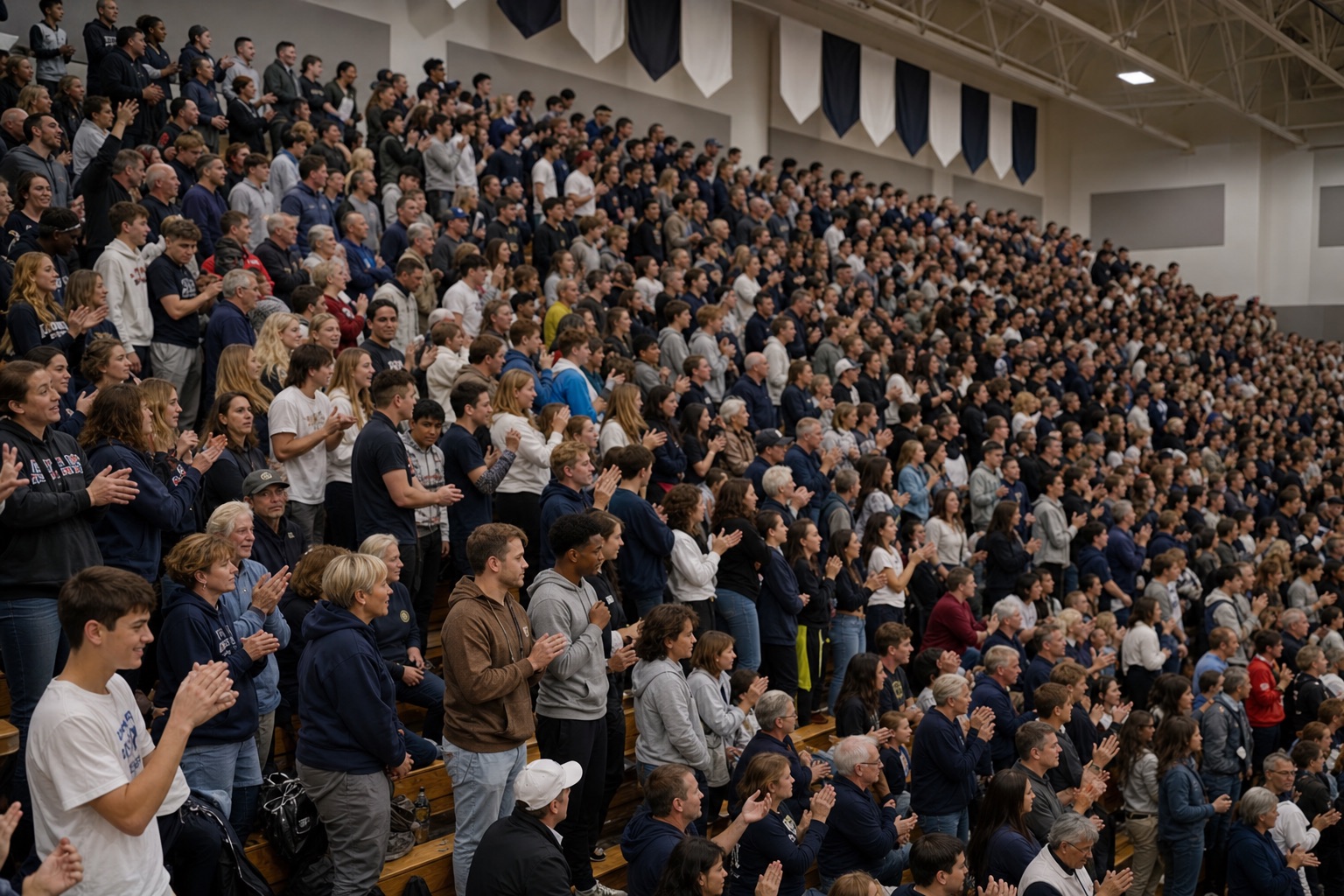
Upload any crowd — packed stands, a sanctuary, a classroom — and AI marks every person it finds, dot by verifiable dot.
Dense-crowd AI takes 10–25 seconds — it's counting every single person.
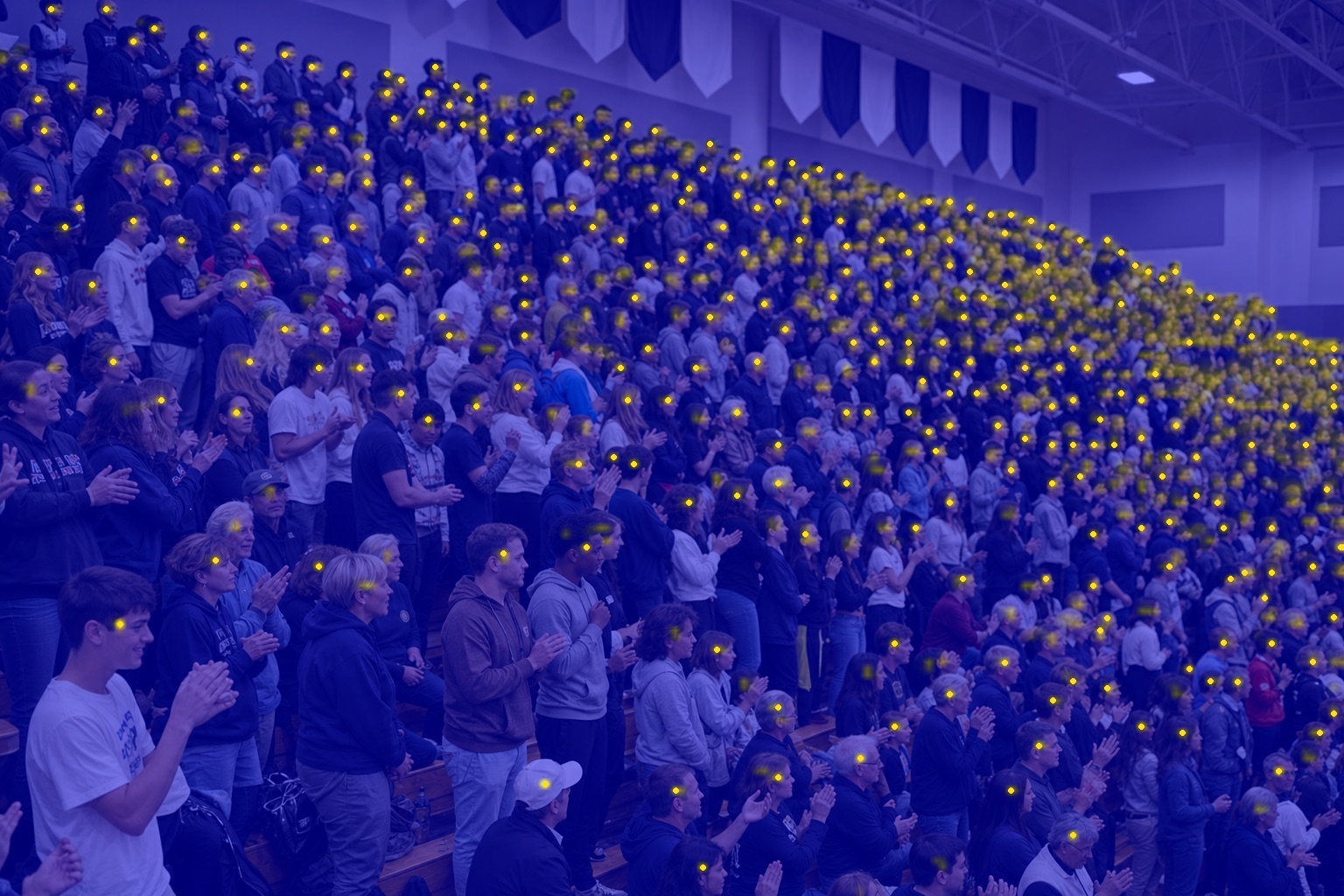
Real output: 734 fans counted in packed bleachers — every dot is one person the model found.
This is actual output from the same engine behind the Crowd Counter iOS app — not a mockup. Dense stands or sparse rooms, the model marks each person so you can check the count yourself.
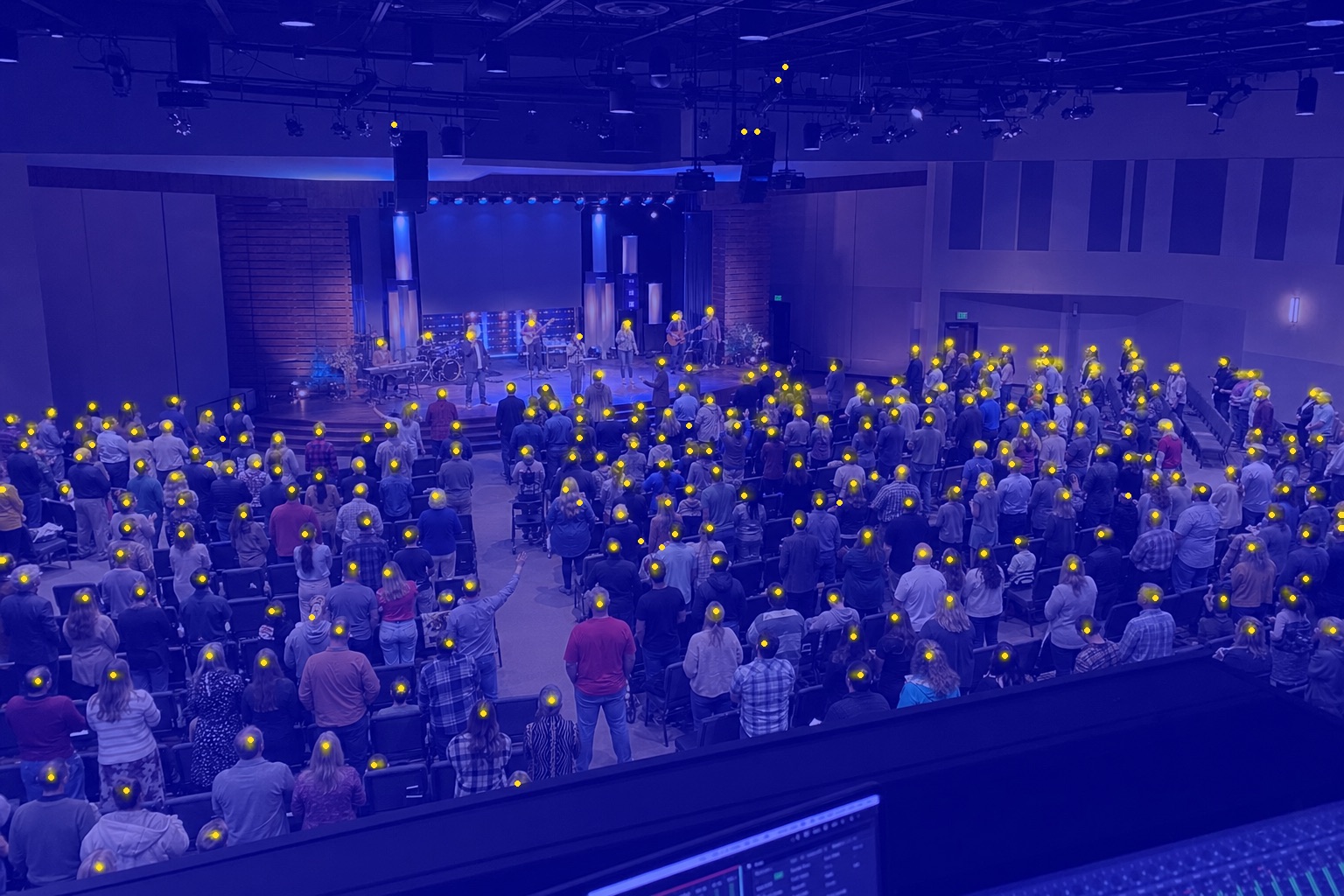
Most free people-counters use generic person detection that gives up past a few dozen people. This tool routes between two purpose-built models — one for dense crowds, one for sparse rooms.
Elevated, wide shots count best. Your photo is processed once and never stored.
Dense-crowd or detection model, chosen automatically for your photo.
The detection map marks each person found — no black-box number.
One photo per service beats clickers and section counts — same method, every week.
How churches count attendance →Non-ticketed sports finally get defensible attendance numbers for conference reports.
How athletics programs do it →Settle the "how many people were there?" question with a map, not a guess.
All the counting methods compared →Purpose-built crowd counting models scan the photo and locate each person. Dense scenes route to a crowd-density model built for hundreds-to-thousands of people; sparser rooms use a detection model. The total comes back with a map marking everyone found.
Two counts a day, free, no signup. If you count the same event every week — a service, a season — the iOS app counts without limits and keeps the record.
It's built for them. Elevated, wide shots work best; very dense crowds where people fully overlap get a strong estimate. The detection map lets you verify the count instead of trusting a black box.
It's processed to produce your count and map, then discarded. No history, no sharing.
The web tool counts photos. For recurring counting, the iOS app files every photo count into a season record automatically.
The app turns counts into a record — trends, photo receipts, and reports you can hand to anyone.
 Crowd Counter